

Is silk versus satin the right cheongsam comparison?
When comparing a satin cheongsam dress with a silk option, separate fibre content from weave. Silk names a fibre; satin describes a weaving structure, so a fabric can be both silk and satin. Read the information for the actual garment before deciding what the name implies about its appearance, construction or suitability for your occasion.
Two attractive cheongsams can carry different fabric descriptions without presenting a simple natural-versus-synthetic choice. One listing may identify silk, another may emphasise a satin finish, and neither short name necessarily supplies the complete composition of the finished piece.
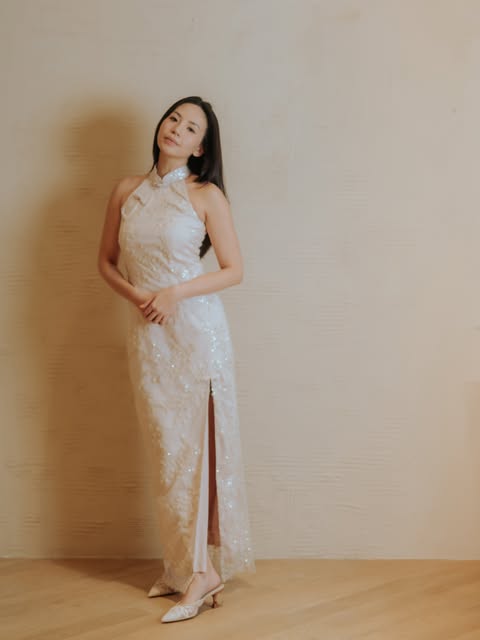
This guide explains how to compare those descriptions before choosing a design. Outpost's Champagne Cap Sleeve Thai Silk Cheongsam and White Duchess Satin Cheongsam with Pink Floral Appliqué provide real examples of the different naming used in its collection. They are design references, not evidence that every proposed order uses identical materials.
Separate the material from the way it is woven
A fibre description concerns what the yarn is made from. A weave description concerns how threads are arranged. These are different layers of information, so asking whether silk or satin is better starts with categories that can overlap.
Silk bedding brand Mulberry Park Silks explains this distinction in its satin-weave guide: its silk charmeuse uses silk in a satin weave, while other satin fabrics can use different fibres. That explains the terminology; its bedding-specific claims do not establish the properties of an Outpost garment.
| Description | What it identifies | What to confirm separately |
|---|---|---|
| Silk | A fibre used in the cloth. | The actual composition, weave and finished construction. |
| Satin | A weaving structure associated with a smooth, lustrous face. | Which fibre or blend is used in the particular fabric. |
| Silk satin | A description combining silk with a satin weave. | The complete garment specification and relevant conditions. |
| Duchess satin in a design name | The fabric description used for that design. | The composition and material selected for your proposed piece. |
The useful comparison is between confirmed fabrics and finished designs. A short name is a starting point for that comparison rather than a substitute for it.
Read what the actual product page says
Outpost's white Duchess satin sample describes short sleeves, pink floral appliqué and pearl-button detailing. It also explains that the piece is a sample for inspiration and that a bespoke creation can be personalised. Those statements support a discussion of the design; they do not supply a universal fibre percentage for everything called Duchess satin.
The Violet Purple Duchess Satin A-Line Cheongsam describes another sample with its own neckline, appliqué and silhouette. Comparing the two shows why a shared fabric label does not make two garments equivalent.
For a proposed order, ask which details come from the reference and which will change. Keep the agreed material and design information together so a decision about one sample does not become an assumption about a different finished piece.
Compare the whole design before ranking the fabric names
A neckline, sleeve, lining or attached detail can change what you notice in a dress. If one sample has a different cut or more decoration, a preference between the two does not isolate the effect of the fabric.
Identify the feature you actually prefer: a more defined outline, a particular surface appearance, a quieter colour treatment or a specific decorative placement. Explain that preference using the sample rather than assuming that one fabric word guarantees the result.
This also avoids a false price conclusion. The labels alone do not establish which finished garment costs more. Compare the actual proposed material, construction, personalisation and scope using the quotation for that piece.
Look at the surface in the relevant setting
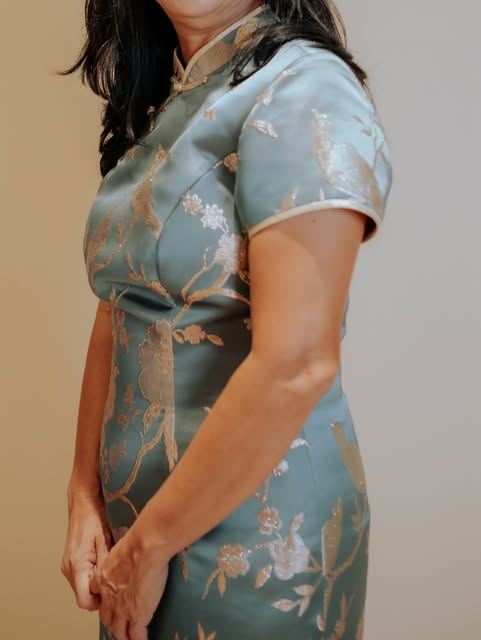
A photograph helps identify a design direction, but its lighting and angle affect how the surface appears. Compare an available sample under relevant lighting where practical, and ask how the material proposed for your piece relates to the photographed reference.
For a Singapore occasion involving both indoor and outdoor settings, describe those settings when discussing the choice. Do not assume that every silk fabric feels the same or that every satin garment will be unsuitable outdoors. The actual cloth, lining, construction and your preferences need consideration together.
Keep appearance and composition as separate observations. A surface that looks glossy does not establish silk content, and a quieter-looking surface does not prove that silk is absent.
Ask what information belongs to the finished piece
Before confirming a design, request the available composition information and identify which material is being proposed. If the answer uses only a broad name, ask what further specification can be confirmed rather than filling the gap from another retailer's description.
Then establish whether the lining and decorative elements have their own relevant details. A fabric comparison concerns one part of a garment; it should not conceal uncertainty about the rest of the construction.
Care is a separate garment-specific question. Obtain the applicable instructions for the finished piece, especially where materials or decoration differ from a sample. This guide supplies no washing, stain-removal or storage method based on the words silk or satin alone.
Choose with a clear comparison in front of you
A useful decision records the actual design reference, confirmed material information, details that will change and questions still unanswered. You can then explain why the proposed piece suits your preferences without treating a fabric label as a guarantee.
If two options remain difficult to compare, identify the missing difference rather than choosing a universal winner. The next useful answer may concern composition, construction or the appearance of an available sample.
Silk and satin cheongsam questions
Is every satin cheongsam made from silk?
No. Satin describes a weave, and different fibres can be used. Confirm the composition of the actual fabric.
Can silk have a satin weave?
Yes. Silk satin combines a fibre description with a weave description; the terms are not mutually exclusive.
Does a shiny photograph prove the material?
No. Use the actual product or order information for composition and use photographs for visible design references.
Does a sample description settle my bespoke order?
Confirm which material and details apply to your proposed piece, especially where personalisation changes the reference design.