

For a plus-size cocktail dress, decide how much coverage you want before choosing a sleeve length. Then compare the neckline, armhole, sleeve and underlayers as one outfit. The useful test is whether you can sit, reach and greet someone comfortably while the dress keeps the coverage you chose. A size label or a photograph cannot answer those questions on its own.
A sleeve is not a requirement for a particular body size, and a sleeveless dress is not a problem to disguise. Start with your preferences and the event's dress code. This guide helps you turn a wish such as “covered, but not restricted” into details you can compare and discuss with a dressmaker.
If you are still deciding where to shop, Outpost's plus-size cocktail dress shopping guide covers that broader question. Here the decision is narrower: choosing the coverage and movement you want from an individual design.
Describe what you want covered, rather than choosing a label
“With sleeves” can mean a small cap at the shoulder, a loose short sleeve or coverage extending past the elbow. It says little about the back, neckline or armhole. Similarly, a high neckline at the front may accompany an open back. Look at all sides of a shortlisted design before deciding that it meets your preference.
Write a simple brief in your own terms: shoulders covered; upper arms partly covered; neckline that stays where you want it when seated; or a dress that works with a particular underlayer. You do not need to justify these choices with rules about which bodies should wear which shapes. Distinguish your non-negotiable requirements from details you are happy to try.
Compare the complete design, not just sleeve length
Use the following table to organise a fitting or a shortlist. These are comparison prompts, not promises about how every dress in a category behaves. A sleeve's cut, fabric and attachment to the bodice matter alongside its length.
| Design option | What to examine | Useful movement check |
|---|---|---|
| Sleeveless or shoulder straps | Armhole depth, strap position and the intended underlayer. | Reach forward, then check the side and back. |
| Cap or short sleeve | Where the sleeve ends and how its opening sits around the upper arm. | Bend and lift your arms normally without pulling the sleeve into place. |
| Elbow-length or longer sleeve | Room at the elbow, cuff opening and any decorative edge. | Sit at a table and bring your hands towards your face. |
| Separate wrap or jacket | Coverage both with and without it, plus how it stays in place. | Try greeting someone and carrying your bag with both hands free. |
Outpost's formal dress collection offers design references to discuss. A photograph is a starting point; confirm which details and materials apply to the piece you are considering. Do not assume a pictured sample establishes size availability or how it will fit you.
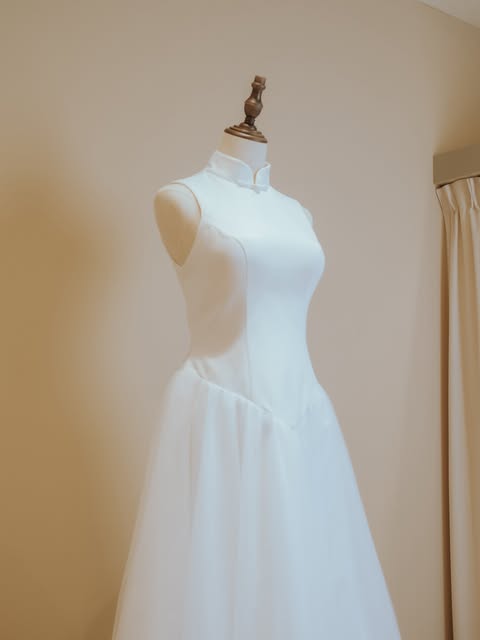
Check the sleeve opening and armhole separately
A sleeve may give the visual coverage you want yet feel restrictive at its edge. Another design may have a generous sleeve opening but expose more at the armhole than you intended. Those are different observations, so describe them separately to the fitter instead of concluding that all short sleeves or all sleeveless styles are unsuitable.
Stand naturally, bend your elbows and reach forward as you would to greet a guest. Notice where the cloth pulls, rubs or moves. If you need to keep rearranging it, demonstrate the movement that causes the problem. Do not force a motion through tight fabric; ask which adjustments or alternative designs are feasible.
For example, “the sleeve edge feels tight when I reach across the table” gives the dressmaker more information than “I need a bigger size.” It still leaves them to assess the construction. Adding room, changing a sleeve or choosing a different design are possibilities to discuss, not alterations this guide can guarantee.
Bring the underlayers you actually intend to wear
Compare the dress with your planned bra or other comfortable underlayer. Look at straps, edges and colour differences around the neckline, armholes and back. Choose whether those details should be visible as part of the outfit or sit quietly beneath it. Neither the colour name nor a “lined” description settles the result.
Change one thing at a time when comparing alternatives. Keep the dress and lighting the same while trying a second suitable underlayer. This helps you distinguish an edge created by the layer from a seam or opening in the dress itself. There is no requirement to use shapewear, and a restrictive layer is not a necessary trade-off for wearing a cocktail dress.
Try the outfit in the situations your event includes
For a Singapore wedding dinner, you may move between arrival photographs, greeting relatives and sitting through a meal. A cocktail reception may involve more time standing and carrying a drink. Write down the actual activities you expect rather than testing only a posed front view.
Sit in an ordinary chair, turn, reach and walk in your intended shoes. Check the neckline and back again after moving. If you want photographs for comparison, keep the angle and lighting consistent. A phone photograph records one setup; it does not predict every venue light or event camera.
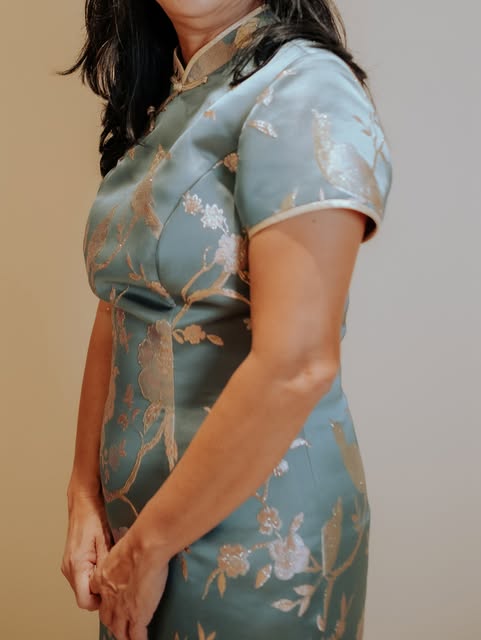
Decide whether a separate layer solves your actual concern
A wrap or jacket can be useful when you want different coverage at different parts of an event. But try it with the complete outfit before treating it as the solution. Check whether it catches on decoration, covers a detail you wanted to show or needs a hand to hold it in place.
If you want the same coverage throughout the evening, a dress that provides it directly may suit your brief better. If you want to remove a layer later, make sure you like the dress both ways. Ask about the actual material and lining rather than assuming that one fabric name guarantees comfort in an air-conditioned room or outdoors.
Take a specific brief to the dressmaker
Save the front and back references you like, your coverage priorities, the event date and the movements that need attention. For an existing dress, describe the concern before asking for a particular alteration. Outpost's studio information and garment FAQs explain that it accepts alteration enquiries and discusses reconstruction; feasibility still depends on the actual garment.
For a new piece, ask what the agreed design includes, what needs a separate quotation and when it can be ready. Keep those answers with the reference image. A complete brief should leave you with a clear design decision, not a promise that a size category, sleeve label or stock photograph guarantees fit.
Questions about sleeves and coverage
Do plus-size cocktail dresses need sleeves?
No. Choose the coverage you want and any requirements of the event. Assess sleeveless and sleeved designs on your own comfort and preferences, rather than treating body size as a dress rule.
Can sleeves be added to a dress I already own?
Ask a dressmaker to assess the armhole, fabric, seams and desired result. A photograph cannot confirm that an alteration is possible or what it will cost.
Should I size up if a sleeve feels tight?
Identify where and when it feels restrictive first. The fitter can compare the sleeve and bodice together; a larger overall size may not address the specific issue.
Can a wrap replace a sleeved dress?
It can offer a different coverage option. Try it while seated and moving, and check the dress with the wrap removed before deciding whether that combination suits the event.