

White dress: how to style the layers you want to show
Before choosing jewellery or a bag, try a white dress with the underlayers you intend to wear. Check which edges, straps and colour differences are visible at the neckline, armholes, waist and hem. Compare the complete combination in your expected lighting and while sitting as well as standing. The aim is a result you have chosen deliberately, whether the layers blend in or form part of the look.
This guide focuses on that layer check, rather than choosing an occasion, a flattering colour or a set of accessories. It applies after you have established that white is suitable for your event. If the host's preferences are unclear, settle that question first; changing what goes underneath does not settle a dress-code question.
Begin with the dress you will actually wear
Try the actual garment, not another white dress that looks similar online. Look inside it to see where lining begins and ends, where there are openings, and whether a fastening or slit changes what is exposed. Do not assume that a pale colour, a fabric name or a photograph tells you which areas are lined.
Outpost's formal dress collection is a starting point for comparing designs. For a selected piece, confirm its construction with the studio. Keep reference photographs and the agreed specification together if your proposed garment differs from the pictured sample.
Make the first check without extra accessories obscuring the dress. You are trying to identify a visible line or edge, not judge the whole outfit at once. A clear starting point makes it easier to tell whether the next change helps.
Compare two underlayer options, one change at a time
Start with a suitable option you already own. Then compare a second option, changing only that layer where practical. Keep the dress, lighting, position and other clothing the same. Otherwise, an apparent improvement may come from the changed setup rather than the item you are comparing.
Do not assume that white underneath white will disappear, or that a colour described as nude will match every wearer. Put the actual pieces together and decide what you can see and what you prefer. There is no need to buy a new item before finding out whether your existing choice works.
| What you notice | Next comparison | Decision to make |
|---|---|---|
| A strap or cup edge appears at an opening. | Try a suitable alternative neckline or strap arrangement. | Do you want that detail visible, or a quieter edge? |
| A colour difference appears through part of the dress. | Compare the second layer in the same position and light. | Which actual combination gives the effect you prefer? |
| A seam or waistband makes a visible line. | Compare another construction without changing the dress. | Does the line remain noticeable during normal movement? |
| A lining ends above an opening or hem. | Identify the two edges separately in the complete outfit. | Is the relationship intentional, or a question for the fitter? |
Read the openings before adding another layer
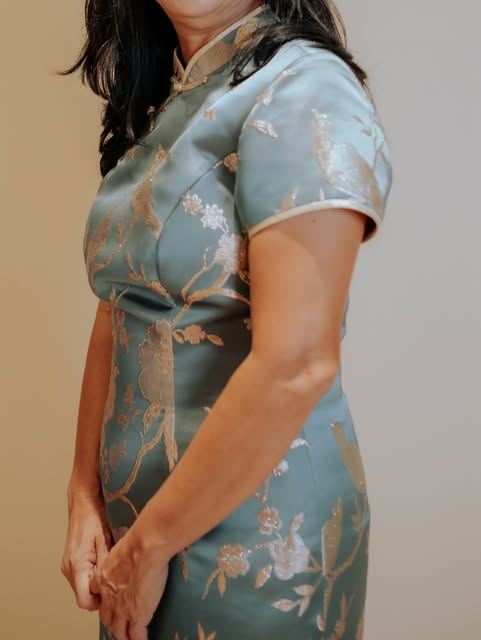
A high collar does not answer every underlayer question: the armholes, sleeves, back and fastening may create different boundaries. Check each opening in the mirror. A layer that sits below one neckline can still appear elsewhere when you turn or reach.
Use the actual cut as your reference. The portfolio photograph below shows collar and sleeve detail; it does not demonstrate the garment's lining, opacity or any undergarment. Its value here is to remind you to look beyond the front neckline.
If a layer feels restrictive, slips out of position or needs constant adjustment, include that in the comparison. A visually quieter result is not useful if you cannot wear it comfortably. Ask the fitter which changes are feasible before assuming that a fastening, lining or neckline can be altered.
Separate the mirror check from the photograph check
First look at the actual outfit in the lighting where you are getting dressed. Then compare it in another relevant setting, such as available daylight and the indoor light you expect at the venue. Do not use a bright light in an unrealistic position as a substitute for the conditions you actually need to assess.
A photograph is a second observation, not a guarantee. Keep the camera position and lighting comparable when testing two options, and review the whole outfit as well as any close-up. If event photography matters, discuss a representative test with your photographer rather than assuming a phone image predicts every camera and lighting setup.
Outpost's cheongsam colour guide covers broader palette and lighting choices. Here, keep the question narrower: are the particular layers and edges giving you the intended result together?
Repeat the check while seated and moving
Sit in an ordinary chair, stand, turn and reach in ways relevant to the event. Notice whether a strap, lining edge or waistband moves into view. Check the back as well as the front, using another mirror or a trusted person's help where useful.
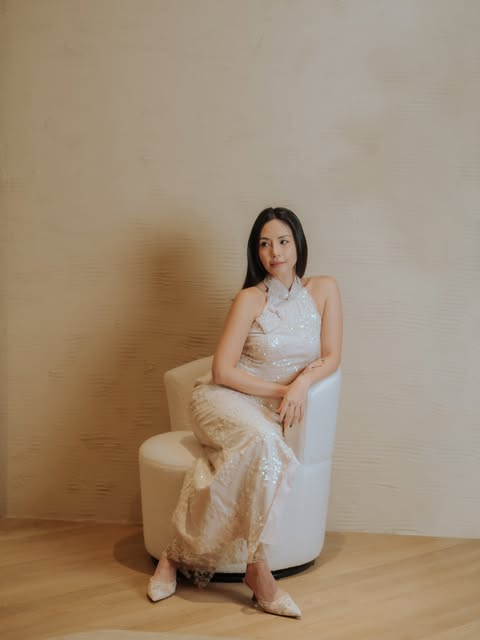
For example, an outfit may look as intended while standing, but an underlayer edge may appear when seated. That observation gives you a specific next step: compare another suitable layer or ask about the relevant opening. It does not establish that the dress needs a larger alteration.
Bring the intended layers to any fitting discussion. Outpost's cheongsam fitting guide provides wider fit context. Explain where and during which movement the edge appears, instead of asking the fitter to solve an undefined concern about the whole dress.
Keep the final choice specific
Once you have a combination you like, keep its pieces together and take a private reference photograph if helpful. Recheck after a confirmed alteration or a change of underlayer. Follow each garment's care instructions; do not attach tape, cut a lining or apply a product simply to conceal an edge without checking suitability.
The outcome is a considered choice about visible layers, not a promise that every white dress can be made opaque or that no camera will reveal a detail. Once that choice is settled, you can return to accessories without using them to distract from an unresolved clothing issue.
White dress layer questions
Should I always wear white underneath a white dress?
No single colour works for every combination. Compare the actual dress and suitable underlayers together in relevant light, rather than relying on colour names.
Does a lined dress remove the need for this check?
Check where its lining ends and which openings remain. A lining description alone does not tell you how your complete outfit will look.
Can a phone photograph prove that nothing will show?
No. Treat it as an observation under that particular setup. Assess the real outfit too and discuss representative photography conditions where relevant.
Should I alter the dress before trying another layer?
Identify the specific issue first. Compare a suitable alternative and ask the fitter about feasible options before committing to an alteration.