

Choose a cheongsam for your tea ceremony by checking three things together: your family's agreed expectations, the movements you will make and the time you have to change. A design that looks right standing still must also work when you sit, reach to offer tea and move between the ceremony and photographs. Confirm the actual garment rather than choosing from a photograph alone.
A tea ceremony outfit is part of an event, not an isolated portrait. The room layout, who is serving whom and your family's customs all affect what you need to do while wearing it. Use those details to make a practical design brief before settling the final silhouette and decoration.
Agree the ceremony plan before deciding the dress
Ask the people organising the ceremony how it will be conducted. Confirm whether you will stand, sit or kneel, whether there will be more than one session, and where family photographs fit into the schedule. Do not assume that a general online guide describes your family's exact arrangement.
SingaporeBrides' tea ceremony guide describes ceremonies held separately at family homes as well as sessions combined at a wedding venue. That range of arrangements matters when planning your clothes. An outfit change that is straightforward in a hotel room may be less convenient during travel between locations.
Confirm colour and garment expectations with your family too. If a particular ceremonial outfit is important to them, settle that discussion before ordering a cheongsam as an alternative. An outfit preference is easier to accommodate before the design and schedule are fixed.
Compare a cheongsam with the requirements of your own ceremony
Outpost's bridal cheongsam collection includes different silhouettes, necklines and decorative treatments. Use it to identify references you want to discuss, not as proof that every photographed design allows the same movements. A slit, flare or particular fabric name does not guarantee that the finished piece will work for you.
| Part of your ceremony | What to check in the outfit | What to confirm before ordering |
|---|---|---|
| Offering tea | Comfort when reaching forward and bringing your hands together. | Whether the proposed sleeves, bodice and decoration suit those movements. |
| Sitting or kneeling, if planned | How the skirt, lining and openings sit in the actual posture. | Whether the design needs adjustment or another silhouette would suit better. |
| Walking between rooms or venues | Hem clearance in the intended shoes and the space needed by any train. | How extra fabric or detachable pieces will be managed. |
| Receiving jewellery or posing for photographs | Access around the neckline and wrists, where relevant. | Which pieces will be added and whether someone will help. |
| Changing into another outfit | Fastenings, underlayers and items shared between the two looks. | A changing place, helper if needed and a realistic sequence. |
This is a set of observations to take to the fitter. It is not a pattern-cutting instruction or a reason to force a garment through a movement it cannot comfortably accommodate.
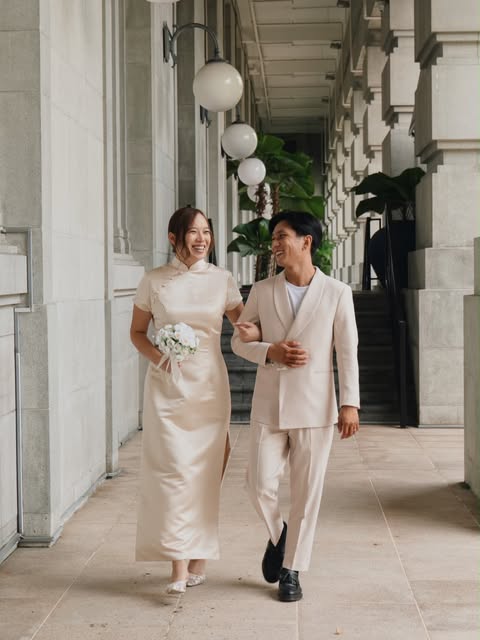
Rehearse the relevant movements without hot tea
At an appropriate fitting stage, explain the movements that your ceremony includes. With the fitter's guidance, try the normal reaching, sitting and walking actions in the proposed outfit and shoes. If kneeling is part of your plan, discuss how to assess it safely and comfortably; no tradition or clothing choice requires you to force an uncomfortable movement.
Use empty hands or an empty cup for a simple rehearsal. Notice whether a sleeve catches, the neckline shifts or the skirt needs constant rearrangement. Describe where the issue appears. “The sleeve pulls when I reach forward” is more useful than saying that the whole outfit feels wrong.
Check the view from the side and back as well as the front. A mirror, or help from someone you trust, can reveal an opening that is not apparent in a standing photograph. Outpost's cheongsam fitting guide covers the broader fit discussion. Here, use the ceremony's actual movements to identify what needs attention, agree which changes are feasible and repeat the relevant check after a confirmed alteration.
Plan jewellery and decorative details around the sequence
If relatives intend to present jewellery during the ceremony, ask what type of pieces to expect where possible. A necklace may need to sit with the chosen collar; a bracelet may require access around a sleeve. This is a practical coordination question, not a rule that every family gives the same gifts.
Consider existing decoration too. A heavily detailed neckline may already be the visual focus of the outfit. Try the accessories you plan to wear with the design reference or available sample, and decide which details you want visible. Keep any added pieces secure using methods appropriate to them rather than improvising pins or adhesives on the dress.
The Qipology ceremony guide describes two-handed service and receiving blessings and gifts. Family arrangements differ, so use this background to prompt your own conversation instead of applying another guide's exact sequence as a universal rule.
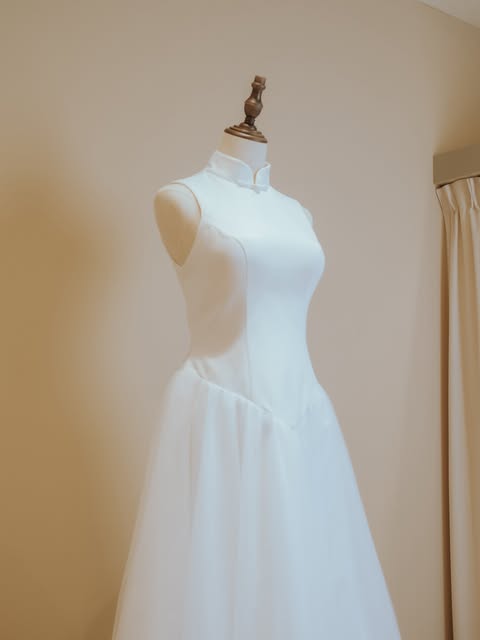
Make the outfit-change decision before the final fitting
If you will wear the cheongsam only for the tea ceremony, confirm what comes immediately before and after it. Decide where the garment will be kept, how it will arrive and whether a fastening needs help. Keep the intended shoes and underlayers with the correct outfit so the plan does not depend on finding them at the last moment.
If you intend to keep it on for the next event, test that complete plan too. A photograph session, a car journey and a meal involve different positions. You do not necessarily need another dress; you need to know whether the chosen one meets the requirements you have actually agreed.
For a Singapore wedding with more than one venue, include travel and room access in the schedule. Do a calm trial change with the real pieces when practical. Use the experience to plan your own time allowance instead of relying on a universal estimate.
Take a concise ceremony brief to the studio
Bring the date, the locations, the agreed dress expectations and your favourite design references. Note the movements to assess and any planned jewellery or outfit change. Label which elements of each photograph you like; otherwise a collar from one reference can be confused with the silhouette of another.
Outpost's garment and appointment FAQ publishes a six-to-eight-week lead time and asks customers with urgent requests to discuss whether their schedule can be met. Confirm the current timing for your own design before making plans around it. A published lead time is not a guarantee that every order can be accepted for a particular date.
The useful result is an agreed outfit and a workable ceremony plan. Keep the confirmed design details and dates together, and revisit them if the family schedule changes. That gives the fitter a specific task and gives you a clear basis for choosing the garment.
Tea ceremony cheongsam questions
Does a tea ceremony require a red cheongsam?
Confirm the family's expectations before choosing the garment and colour. This guide does not treat one family's preference as a rule for every ceremony.
Does a side slit mean I will be able to kneel comfortably?
No single feature proves that. Assess the actual skirt, lining, openings and fit with the fitter, using the posture your ceremony requires.
Can I wear the same cheongsam to the reception?
Consider the agreed dress expectations and all the activities involved. Check the whole outfit for both events before deciding whether a change is useful.
What should I bring to the fitting discussion?
Bring the ceremony schedule, design references and intended shoes and underlayers where requested by the studio. Explain the movements and any jewellery or outfit change you need to accommodate.